How to Answer “What Are Your Salary Expectations?”
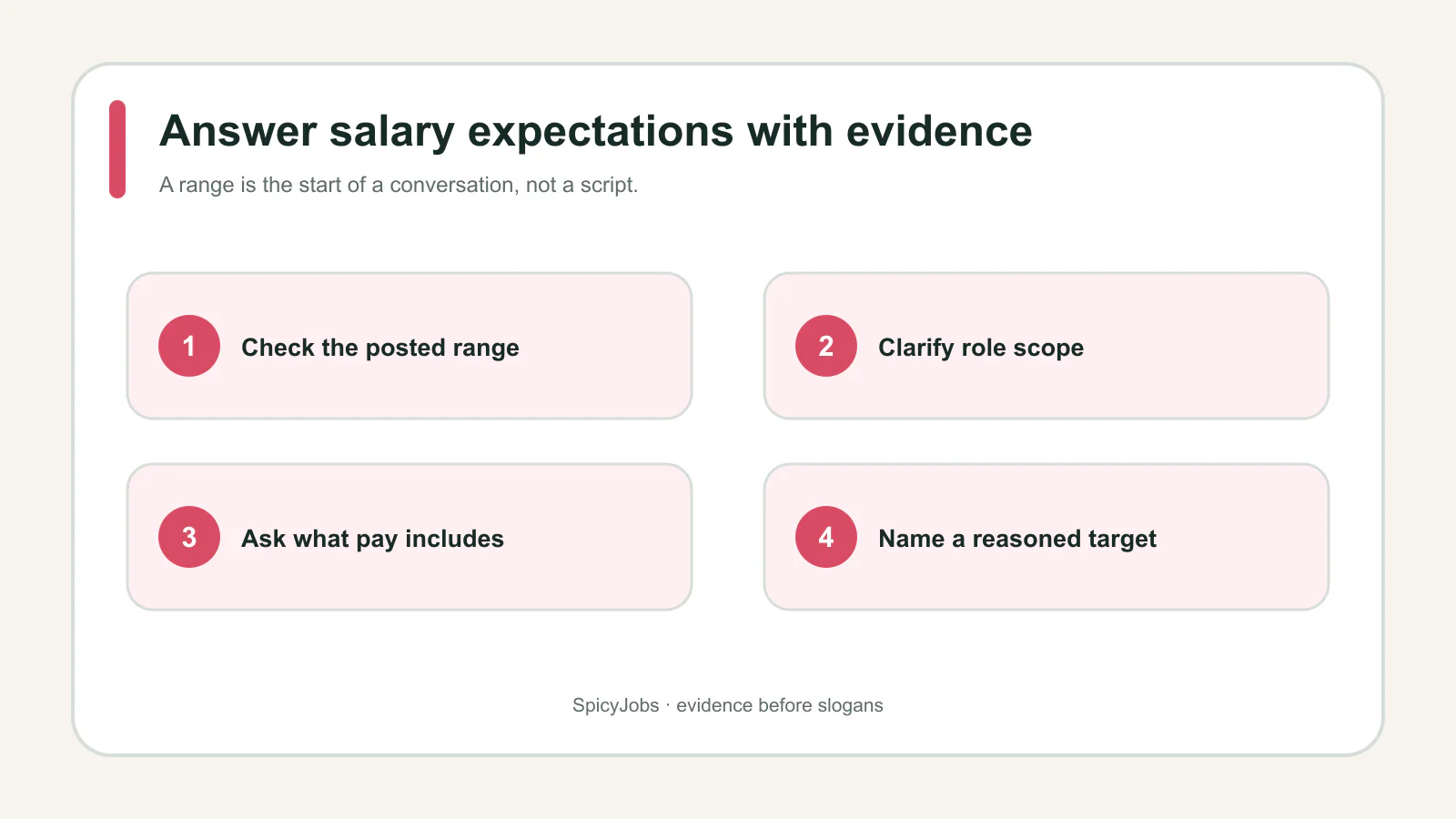
Image: SpicyJobs
“What are your salary expectations?” has no universally correct answer. The useful response depends on whether a range is posted, what the range includes, when the employer asks, and how closely your evidence matches the role’s scope.
Pay-transparency laws can make the conversation more informed, but they do not turn the top third of every range into a default target.
If the posting has a range
First, clarify what the figures represent. A range may refer only to base pay, while bonus, commission, equity, overtime, benefits, or geographic adjustments sit outside it.
A neutral early-stage response:
“I saw the posted base-pay range of [range]. Before narrowing my expectations, could you confirm the level, location band, and what is included in total compensation?”
After discussing scope:
“Based on the responsibilities we discussed and my documented experience with [relevant work], I would be comfortable around [range], subject to the full package and final scope.”
Choose the number from comparable work and your real constraints:not from an arbitrary rule about aiming high.
If no range is shown
You can ask for the employer’s budget:
“Could you share the budgeted base-pay range and the main components of total compensation?”
If an application requires a number, use a researched range you would genuinely consider, and state assumptions where the form allows:
“My current estimate is [range] in base pay for the scope described, depending on location, level, bonus, equity, benefits, and schedule.”
Do not set the bottom of a range below an amount you would knowingly reject. A wide range with no explanation can also communicate that the research is unfinished.
If asked about current or prior pay
Salary-history rules vary by jurisdiction. Do not tell every reader that an employer is legally barred from asking.
A response that keeps the discussion on the new role:
“I’d prefer to focus on the responsibilities and compensation budget for this position. What range has been approved?”
If you believe a question violates local law, save the posting and communication, check the relevant labor agency, and consider qualified legal advice.
Compare the complete offer
Before treating two numbers as equivalent, write down:
- base pay and guaranteed hours;
- bonus or commission conditions;
- equity instrument and vesting terms;
- insurance cost and eligibility;
- retirement contributions;
- paid leave;
- remote-work and travel requirements;
- start date, probation, and severance terms; and
- currency, payroll country, and worker classification.
Remote roles deserve particular care because the employing entity, work location, tax exposure, benefits, and labor protections may differ.
Negotiation is not outcome-guaranteed
A strong explanation can make a request clearer; it cannot create budget or guarantee acceptance. An employer may place a candidate at any point in a good-faith range based on lawful factors, may revise a range, or may end the process. The candidate can also decline.
The durable skill is making assumptions explicit and getting the final terms in writing.
Source notes
- New York Department of Labor’s pay-transparency FAQ explains good-faith ranges, covered advertisements, and compensation excluded from the statutory range.
- Colorado Department of Labor and Employment job-posting guidance explains Colorado disclosure requirements.
- California Department of Industrial Relations Equal Pay Act guidance explains California’s pay-scale rules.
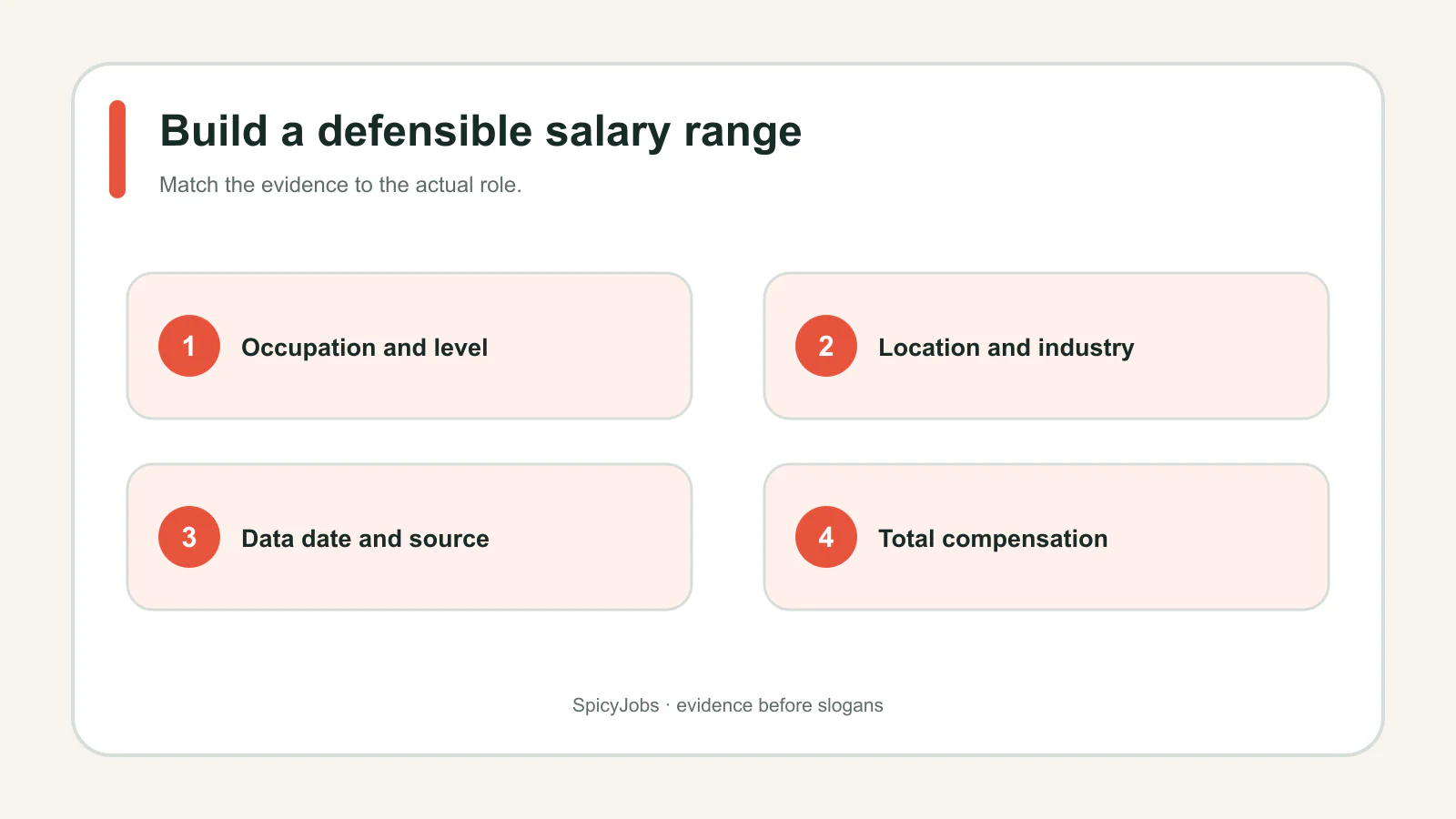
- BLS Occupational Employment and Wage Statistics provides occupation, industry, state, and area wage tables.
Source check: 27 July 2026.
This article provides general career information, not legal, tax, immigration, or financial advice.
salary negotiationpay transparencysalary expectationsjob search2026 hiringcareer advice