The AI Hiring Test May Be Measuring Your Disability, Not Your Skill
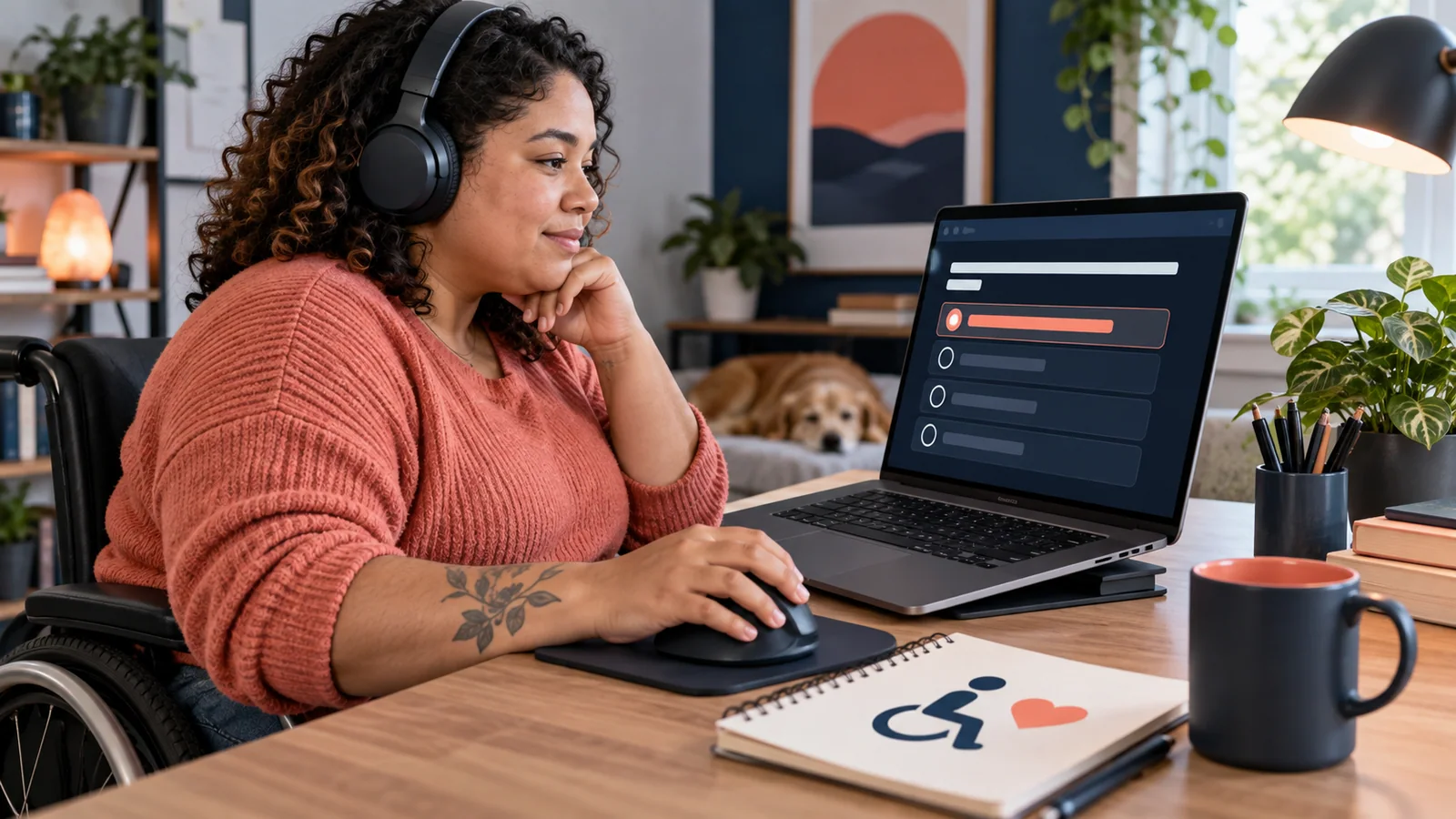
Image: SpicyJobs
An automated interview may score eye contact, speech pattern, response speed, facial movement, keyboard behavior, or game-like performance. The vendor may call that objective. A measurement can be consistent and still be unrelated to the job or distorted by disability.
Essential function first
The EEOC explains that an employer generally may not base hiring decisions on disability and must consider whether an applicant can perform essential job functions with or without reasonable accommodation.
That principle does not disappear because software administered the test. The practical question is whether the assessment measures a genuine job requirement and whether an accommodation can provide a fair way to demonstrate it.
Before the assessment
If a tool presents a disability-related barrier:
- locate the employer’s accommodation contact;
- describe the barrier and requested change, not unnecessary medical history;
- ask what skill or function the assessment measures;
- propose an accessible alternative where possible;
- preserve the request and response.
Examples could include additional time, a keyboard-accessible version, captions, screen-reader compatibility, a non-video response, or another method that measures the same essential skill.
Do not reverse-engineer the robot
Candidates are often told to stare unnaturally into the camera, remove vocal pauses, or perform a personality for the model. That advice can disadvantage applicants and may not reflect the employer’s actual scoring.
Prepare clear job evidence, follow stated instructions, and ask the employer for process information. Do not buy a coach’s unsupported claim that one facial expression beats the algorithm.
Employers need evidence too
The EEOC’s 2024–2028 enforcement plan identifies technology, including AI and machine learning used in recruiting and hiring, as an area of concern where it creates barriers. Employers should therefore know what a vendor measures, validate relevance, monitor outcomes, and maintain an accommodation path.
Sources and limits
Employment rights and procedures vary by jurisdiction. This article is general education, not legal advice.
Key takeaway
Automation does not make a test neutral. If the format measures a disability-related barrier rather than an essential job function, ask for a reasonable alternative and preserve the evidence.
AI hiringreasonable accommodationdisabilityjob assessment